
In quantitative research, open-ended questions have long presented a methodological trade-off: while they offer the potential for deep insight, traditional survey interfaces often result in fragmented or shallow data. A recent independent study by Amina Aini from Human Highway evaluates a potential solution to this structural limitation, comparing traditional online questionnaires with an AI-moderated conversational modality, referred to here as AIMI.
The research utilized a sample of 1,003 participants to quantify how the AIMI modality affects informational quality, cognitive depth, and the overall respondent experience.
The study compared two distinct approaches to open-ended data collection4:
The AIMI modality demonstrated a significant increase in the volume and variety of collected data across three primary metrics:
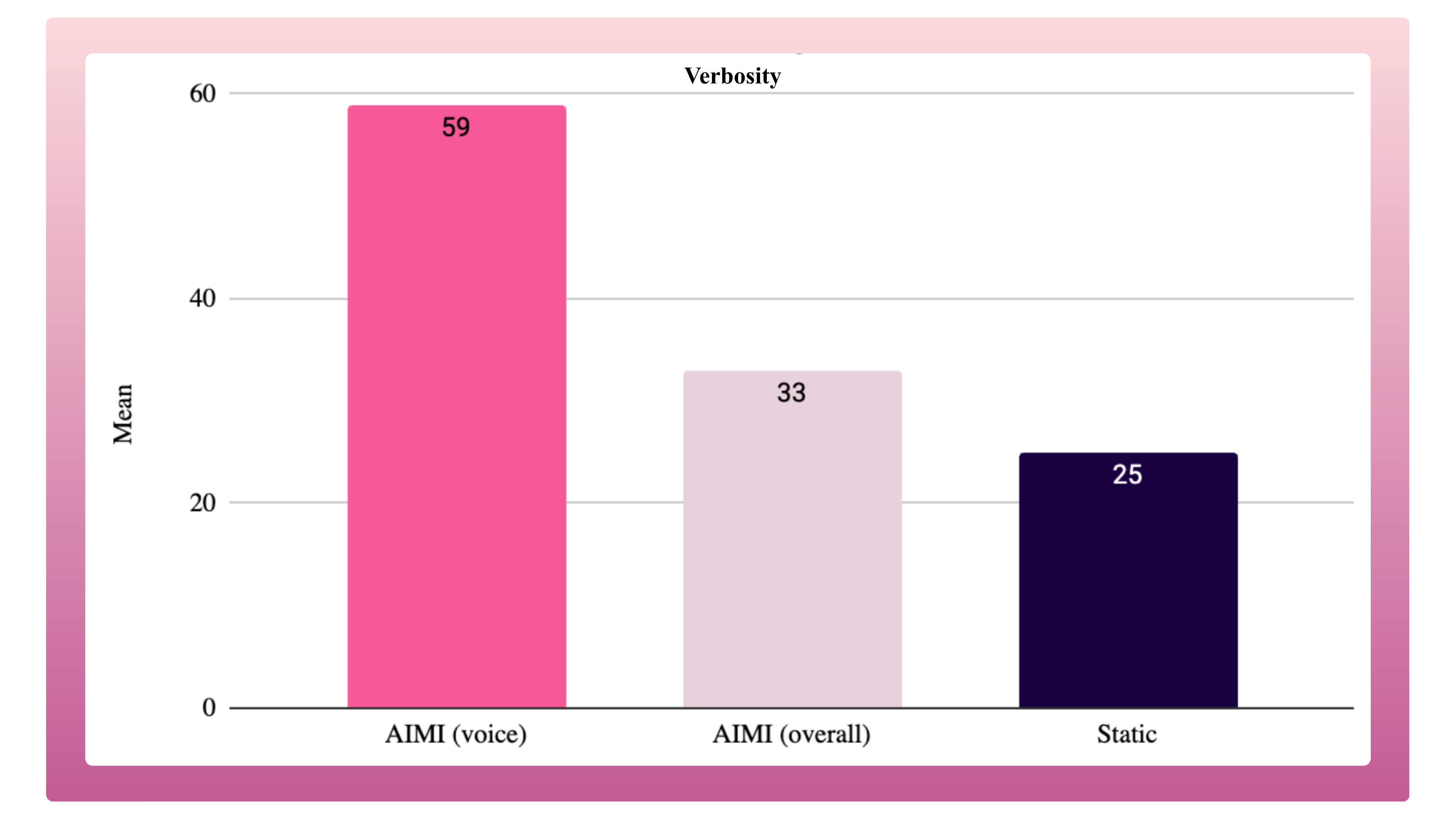
Human Highway's analysis indicates that these increases represent a genuine expansion of ideas rather than mere repetition or "textual stretching".
The research further examined the structural integrity of participant discourse, revealing that the AIMI modality influences how respondents organize their thoughts:
These results suggest that the conversational interface encourages respondents to transition from isolated statements to more logically organized, micro-narrative structures.
A notable finding of the study was the impact of the voice channel within the AIMI modality. Spoken responses averaged 58.65 words - a 132.28% increase over the traditional text-based mode.
Furthermore, semantic cohesion in voice-only responses was more than double (+105%) that of text-only AIMI responses. This suggests that oral interaction reduces the "cognitive friction" typical of typing, allowing for a more natural and fluid expression of reasoning.
.png)
Contrary to concerns that deeper probing might increase respondent burden, the study found that the AIMI modality improved the perceived experience:
Crucially, qualitative analysis confirmed that the thematic structure of opinions remained stable across all modalities. The AIMI modality did not introduce thematic bias or suppress existing topics; rather, it intensified the narrative dimension of the responses.
For researchers, these findings indicate that conversational interfaces can bridge the gap between quantitative scale and qualitative depth, producing richer insights without compromising standardization.
Interested in the full statistical analysis and methodology? Read the complete whitepaper by Human Highway or contact us at hello@glaut.com.
Collect, analyze, and report research from any source with more depth, speed, and control.
Schedule a free demo