Glaut absorbs the operational layer of research at each step of the research workflow - design, collection, analysis, reporting - so your team's hours go to the work only you can do: judgment, story, advisory.


.svg)
.svg)





.svg)


Survey platform. Panel partner. DP, Excel, SPPS, R. Charting. Deck. Margin and capacity bleed out where the systems don't connect.
Panel management, survey programming, data cleaning, visualization, and formatting extend delivery timelines and delay client impact.
Static surveys tell you what respondents report, but they do not reveal the context or motivation behind their answers.
MR firms lose margin when outsourcing, switching tools, and adding extra qual phases just to explain the why behind survey results.
Collect data with AIMIs in 50+ languages. Analyze verbatim and quant datasets. Build charts and draft the report. Researchers use Glaut in DIY mode.
Go from brief to insights in 1 day. Glaut runs the interviews and starts analyses after fieldwork closes.
*time vary with fieldwork
AIMIs support survey structure plus dynamic, open-ended follow-ups. Blending quant structure with qual depth at scale.
The full research workflow is on a single platform, with AI-moderated depth, quant scale, and integrated analysis within one study.
Glaut is designed for experienced researchers who use the platform fully autonomously and can run mixed-methods studies based on client needs on one platform.
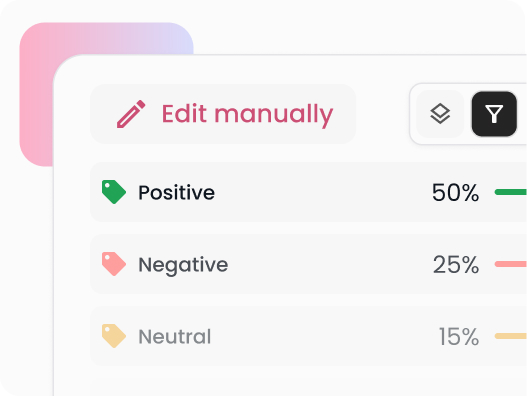
Full control at every stage - from brief to final insights.
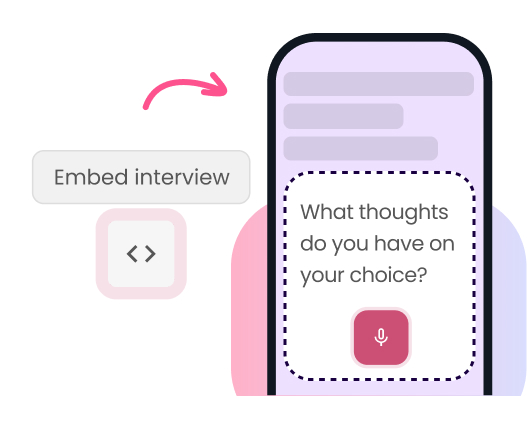
Easily fits into your stack - from surveys to export.
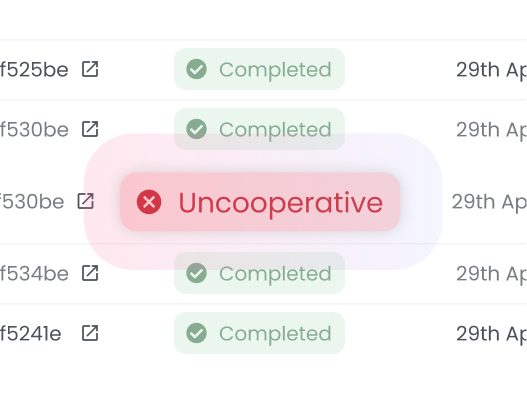
Uncooperative detector agent flags low-quality data in real-time.
Choose a use case to see Glaut in action: try the interview as a participant and read the report.






Glaut software is able to perform in-depth, automatic, real-time analysis of unstructured data from thousands of AI-moderated interviews:
Thematic coding of verbatims: Glaut performes multi-layered thematic analysis ( codes and sub-codes) from open-ended responses. This process can be executed trough:
- Customizable instructions: Researchers can specify the goal of the analysis, such as identifying emotions, key drivers, or other tailored objectives, and Glaut will find suitable themes by looking at the answers.
- Codebook support: Alternatively, researchers can provide a predefined codebook, and Glaut will apply it to categorize responses.
Entity recognition: Glaut can analyze and highlight specific entities mentioned in responses, such as brands, products, or organizations.
Interpretative analysis: Glaut can interpret verbatim through a custom lens, decided by researchers. This is used to extract emotions, sentiment, likelyhood to purchase or to churn, or other tailor-made analyses.This flexibility allows for tailored, in-depth analysis that aligns with your research goals.
Glaut delivers three complementary outputs:
Dashboard visualizations: researchers can access interviews analyses on Glaut's platform, visualizing codes and sub-codesderived from responses, enabling segmentation of insights across answers.
CSV/SPSS export output: researchers can export analyzed interviews’ data in a structured CSV/SPSS file, to conduct more complex statistical analyses with them.
Report: Glaut provides modular executive reports about key insights, focused on actionable advice, and high-level recommendations to drive decision-making.
Unlike other AI tools that operate as "black boxes," Glaut is built for experienced researchers, giving them significant control, customization and flexibility over each step of a research process, from briefing to final report. Glaut also stands out with its voice-based approach, where both questions and answers are delivered and processed via voice. Finally, one of our platform's core strenghts is the focus on verbatim analysis and interpretation, such as inferring purchase likelihood or NPS scores, without directly asking those questions to the respondents.
In summary:
- Customization & Flexibility for researchers
- Voice-based research
- Deeper insights from verbatim
Collect, analyze, and report research from any source with more depth, speed, and control.
Schedule a free demo